Trace fossils
Trace fossils record what animals did (resting, crawling, feeding, dwelling and escaping) rather than their bodies. They're named as ichnogenera, which say nothing about who made them, and they're rarely transported, so they record conditions where they formed.
Ichnogenera
 CruzianaLocomotion / feeding
 RusophycusResting
 DiplichnitesLocomotion
 SkolithosDwelling
 ArenicolitesDwelling / feeding
 DiplocraterionDwelling
 OphiomorphaDwelling
 ThalassinoidesFeeding / dwelling
 ZoophycosFeedingno open-licensed photoChondritesFeedingno open-licensed photoPlanolitesFeeding
 RhizocoralliumDwelling / feeding
 RosseliaDwelling
 TaenidiumFeeding
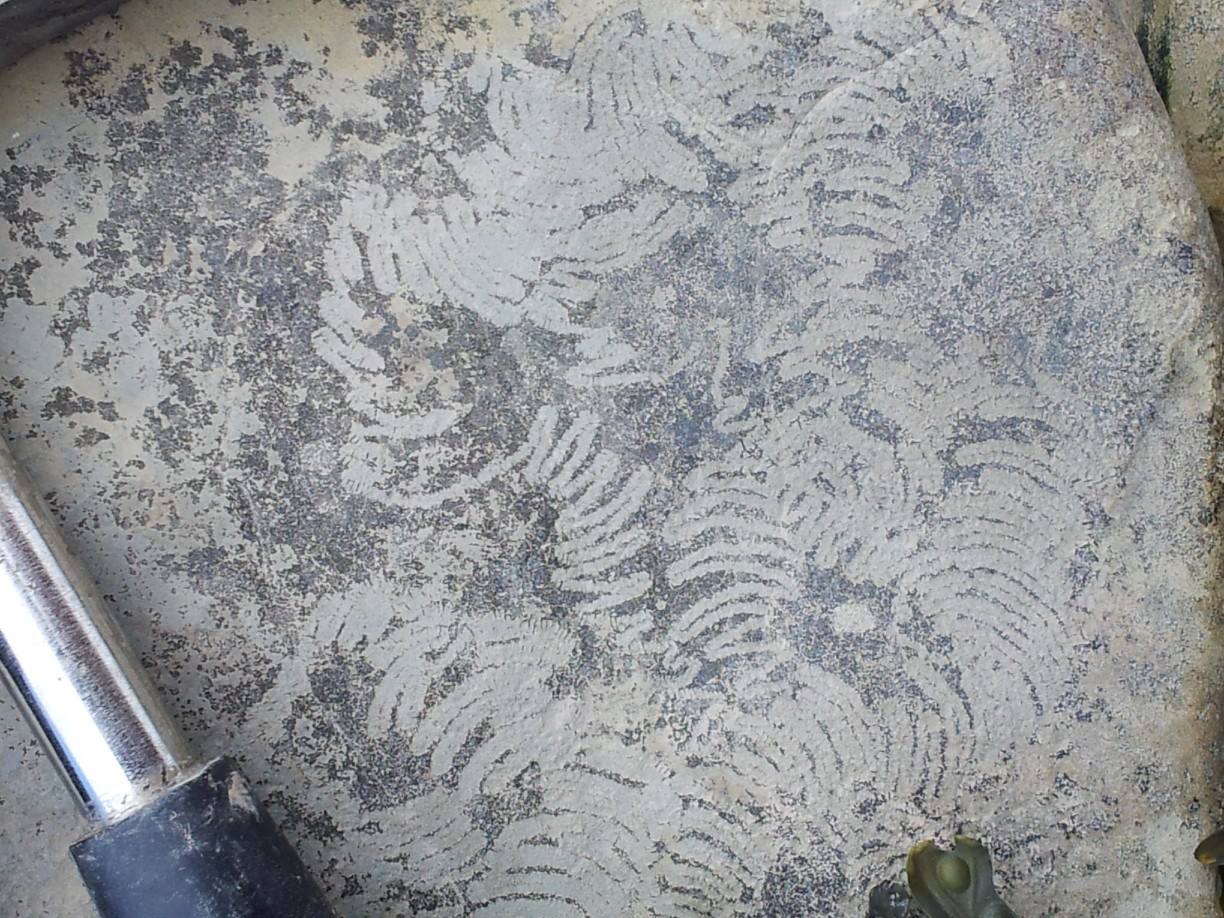 NereitesGrazing
 PaleodictyonFarming (probable)
 CosmorhapheGrazing
 SpirorhapheFarming
 HelminthopsisFeeding
 AsteriacitesResting
 LockeiaResting
 ConichnusDwelling / resting
 OlivellitesLocomotion / grazing
 CochlichnusLocomotion
 MacaronichnusFeedingno open-licensed photoTreptichnus pedumFeeding (burrow)
 Teredolites and Trypanites (borings)Bioerosion
 Tetrapod trackwaysLocomotion
Behavior (ethology) classes
| Class | Behavior | What it looks like |
|---|---|---|
| Cubichnia | Resting | Shallow depressions that often preserve the resting animal's body shape. |
| Repichnia | Locomotion | Linear to sinuous trackways or trails parallel to bedding. |
| Pascichnia | Grazing | Surface feeding traces parallel to bedding that rarely cross themselves. |
| Fodichnia | Feeding | Burrows where animals processed sediment for food, often mostly horizontal. |
| Domichnia | Dwelling | Homes below the surface, often U-shaped or branching and commonly perpendicular to bedding. |
| Agrichnia | Farming | Geometric burrow systems used to grow bacteria or algae for food. |
| Fugichnia | Escape | Vertical movement to escape burial, often nested or stacked. |
| Equilibrichnia | Equilibrium | Vertical adjustment to stay level with a rising (or eroding) sediment surface. |
| Praedichnia | Predation | Bite marks, borings and repaired shells from predation. |
Ichnofacies
Recurring groups of traces that track environment, mainly water depth, energy, oxygen and substrate. Adolf Seilacher developed the concept in 1967.
| Trypanites | Hardgrounds: rocky coasts, beachrock, reefs, bone beds, coquina. Borings are the only traces; bioerosion is the key process. |
|---|---|
| Glossifungites | Firmgrounds: compacted, dewatered mud or sand later exhumed by erosion, in shallow to deep water. A mix of relict and overprinted traces. |
| Teredolites | Woodgrounds: wood clasts, log jams, peats and coals, mostly in estuaries, delta plains and back-barrier areas. |
| Psilonichnus | Supralittoral to upper littoral, moderate to low energy: beach backshores, dunes, washover fans, supratidal flats. Mixes terrestrial traces with marine burrowers such as crabs. |
| Skolithos | Shifting, well-sorted sand in the littoral zone under moderate to high energy: beach foreshores and shorefaces; also estuarine point bars, tidal deltas and deep-sea fan sands. |
| Cruziana | Moderate- to low-energy offshore settings: shelves and epeiric seas, and quieter parts of estuaries, bays, lagoons and tidal flats. |
| Zoophycos | Quiet water from restricted littoral to bathyal settings, typically offshore below storm wave base, often oxygen-deficient. |
| Nereites | Bathyal to abyssal settings with slow pelagic/hemipelagic deposition, sometimes interrupted by turbidites. |
| Scoyenia and Mermia | Continental (non-marine) ichnofacies. |


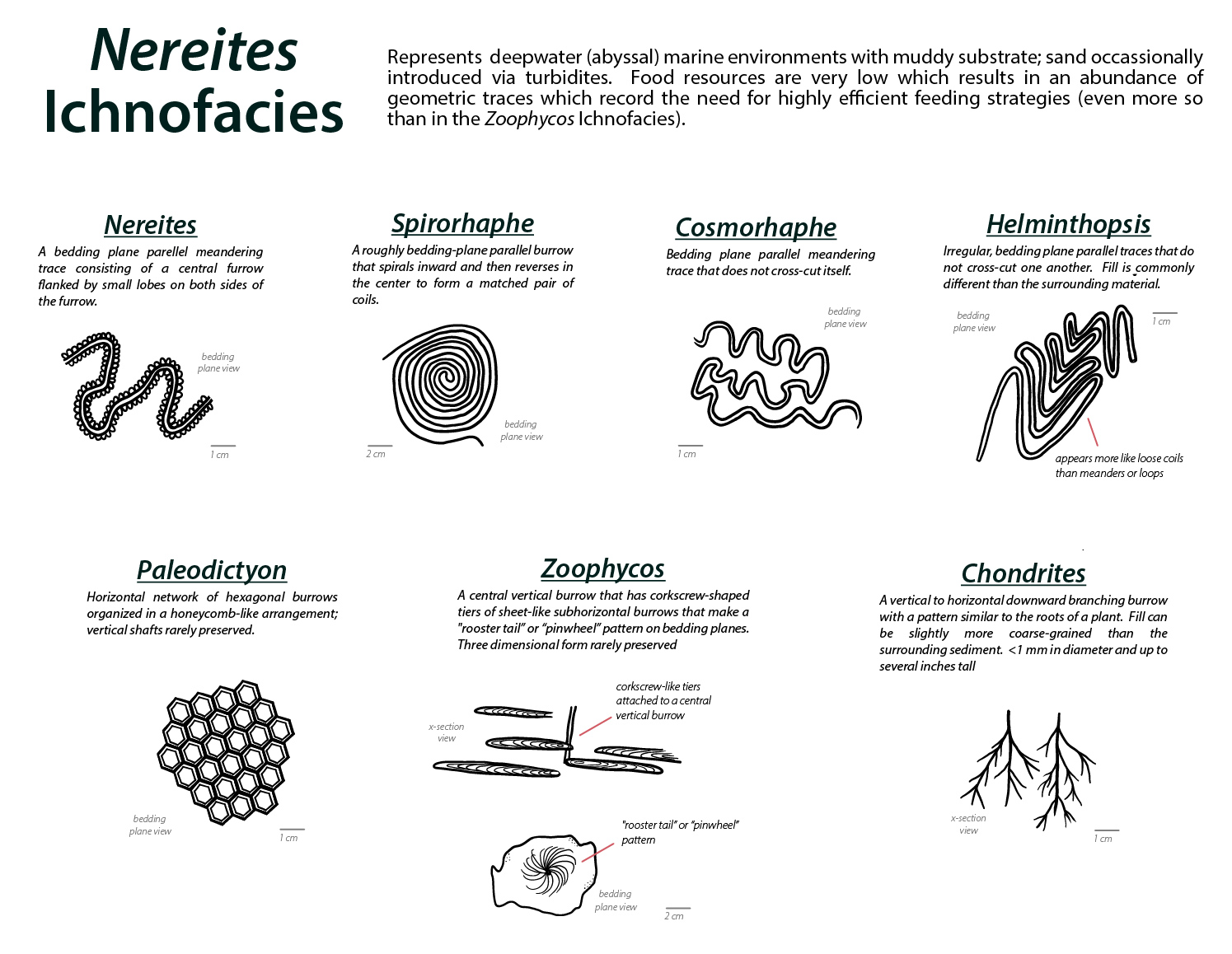

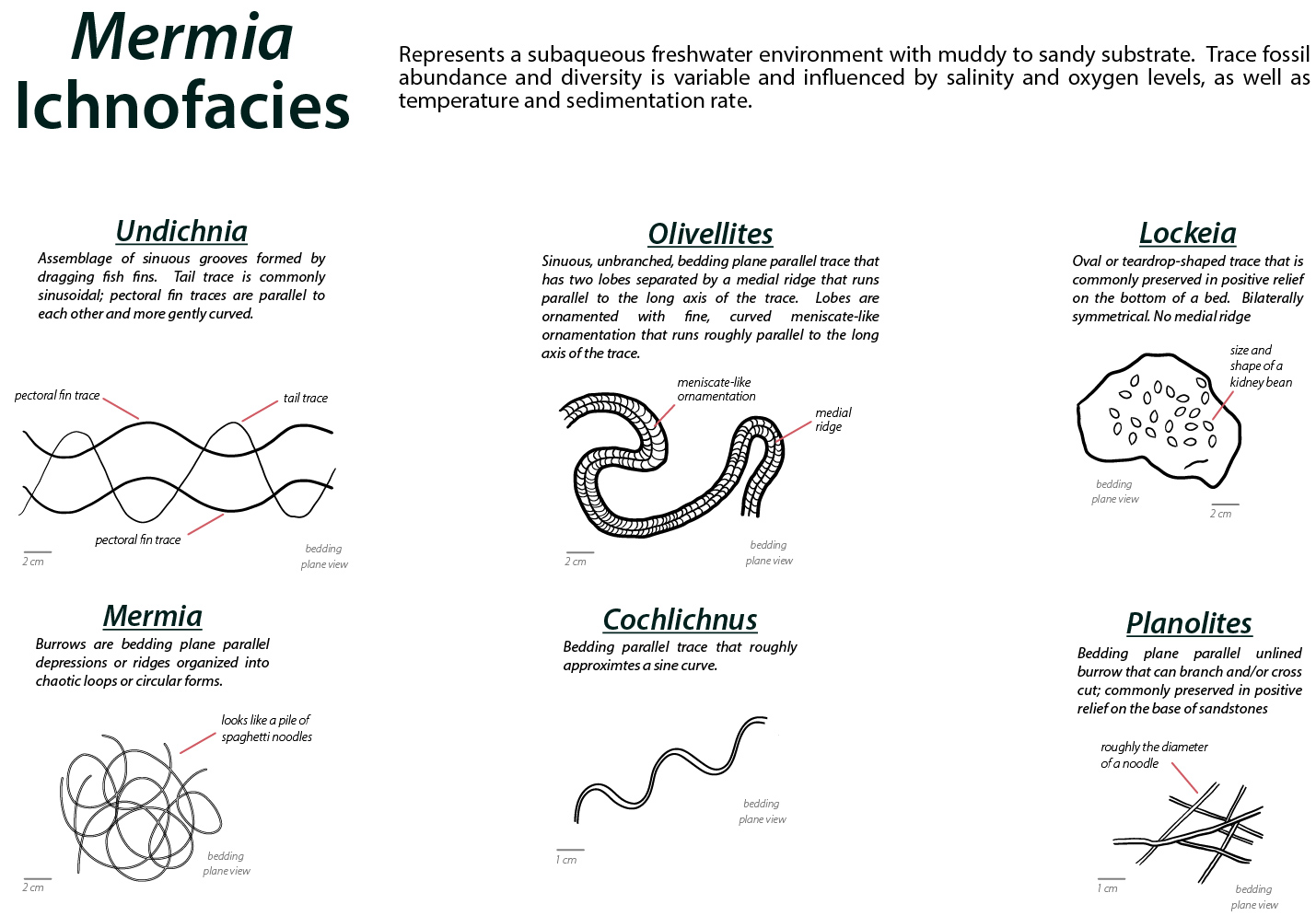


Photos are hosted by their original sites and shown under their open licenses (CC BY, CC BY-SA, public domain or Open Government Licence). Click a photo for its source page.
Traces through time
- The first appearance of Treptichnus pedum marks the base of the Cambrian, about 539 million years ago.
- Cruziana and Rusophycus appear in the earliest Cambrian and persist into the Triassic, after trilobites were gone.
- Skolithos: Early Cambrian to present. Zoophycos: Early Ordovician to present, moving from deep water (Silurian) to nearshore (Devonian–Permian) and back to deep water today.
- Thalassinoides becomes abundant at the start of the Mesozoic; Ophiomorpha ranges from the Early Permian and is prominent from the Jurassic.
- Paleodictyon: Precambrian/Early Cambrian to the present, in the deep sea.
Sources
Rygel & Quinton, Sedimentary Geology 9.6: Trace Fossils · KU Ichnology: Ichnofacies models · Wikipedia: Trace fossil · Wikipedia: Treptichnus · Wikipedia: Cruziana · Wikipedia: Rusophycus · Wikipedia: Skolithos · Wikipedia: Zoophycos · Wikipedia: Thalassinoides · Wikipedia: Ophiomorpha · Wikipedia: Paleodictyon